What Is Artificial Intelligence for Kids?
What AI is, how machine learning finds patterns in examples, how chatbots work, and why AI can make mistakes.
Read article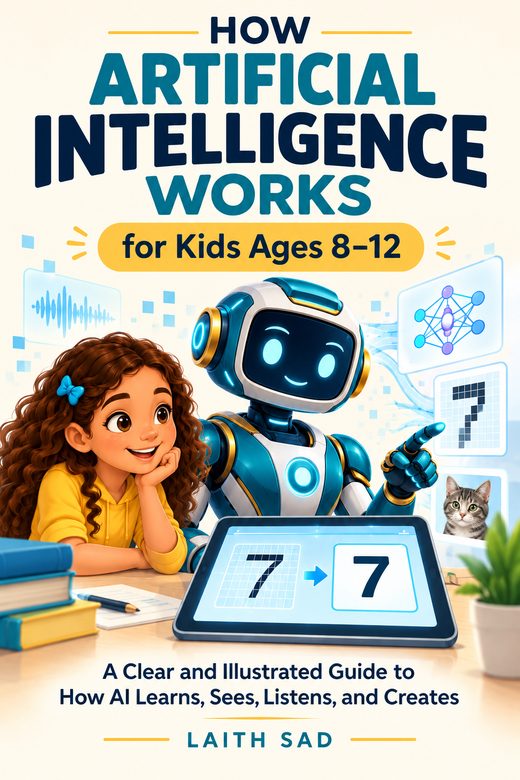
An Illustrated Guide to Machine Learning, Chatbots, Robots, AI Mistakes, and Using AI Wisely
How can a tablet recognize a handwritten number? How does a computer turn speech into words? And why can a chatbot give an answer that sounds convincing but is completely wrong?
This book takes curious readers inside the ideas behind everyday AI. Through clear explanations, illustrations, questions, and hands-on activities, children discover what these systems do, how people build them, and why their answers still need to be checked.
The book has eight chapters that build from basic AI ideas to real-world use, with illustrations, “look closely” questions, and five paper-and-pencil activities about patterns, context, robot parts, and checking claims. Answers, a glossary, references, and an index are included. It gives parents and teachers a starting point for talking with children about AI, online privacy, and checking digital information.
Read a free introduction to the same topic before you decide. It works as a first lesson or a conversation starter.
All Learn articlesWhat AI is, how machine learning finds patterns in examples, how chatbots work, and why AI can make mistakes.
Read article