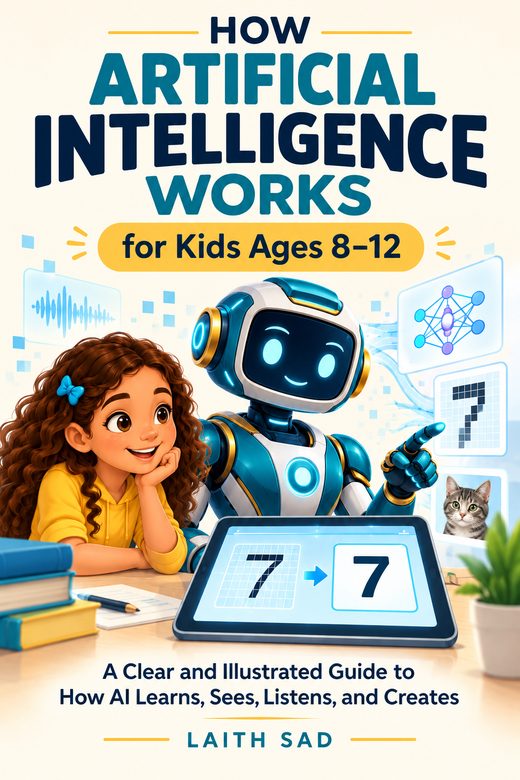
How Do Computers Work for Kids?
The CPU, RAM, storage, input, output, and the operating system, and how they work together when you type and save a story.
Read article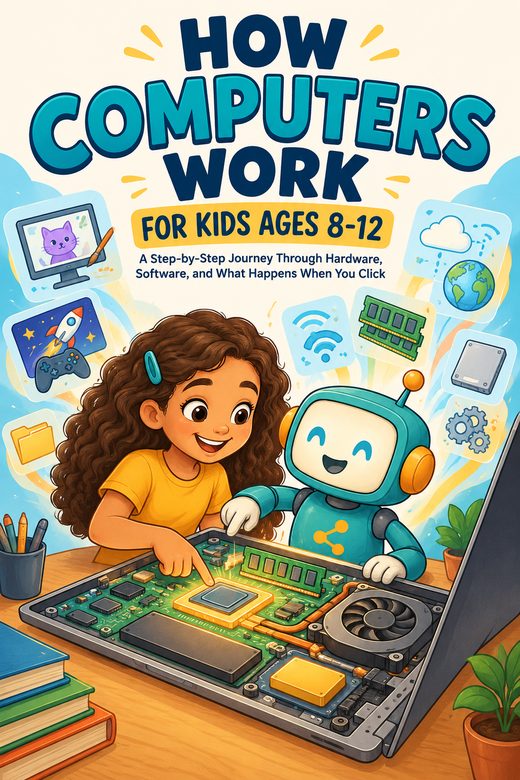
A Step-by-Step Journey Through Hardware, Software, and What Happens When You Click
What really happens inside a computer when a child clicks an icon, types a word, opens a game, or saves a file? Kids use computers every day, but the technology behind the screen can still feel like a mystery.
Guided by Maya and her friendly robot companion, readers follow familiar actions from start to finish. They look inside a computer, see how information moves, discover what the main parts do, and learn how hardware and software work together.
Each chapter uses short explanations, relatable examples, illustrations, Try It! activities, and Quick Checks. The back of the book includes two games, a kid-friendly glossary, an answer section, and a completion certificate. It works well for independent reading, parent-child learning, homeschool technology lessons, classroom enrichment, and STEM shelves.
Read a free introduction to the same topic before you decide. It works as a first lesson or a conversation starter.
All Learn articlesThe CPU, RAM, storage, input, output, and the operating system, and how they work together when you type and save a story.
Read article