What Is a Password? Explained for Kids
A password is a secret that only you should know. When you type it in, a website or app can tell that it is really you signing in, and not someone else.
What makes a password weak?
A weak password is one that is easy to guess. These are all weak:
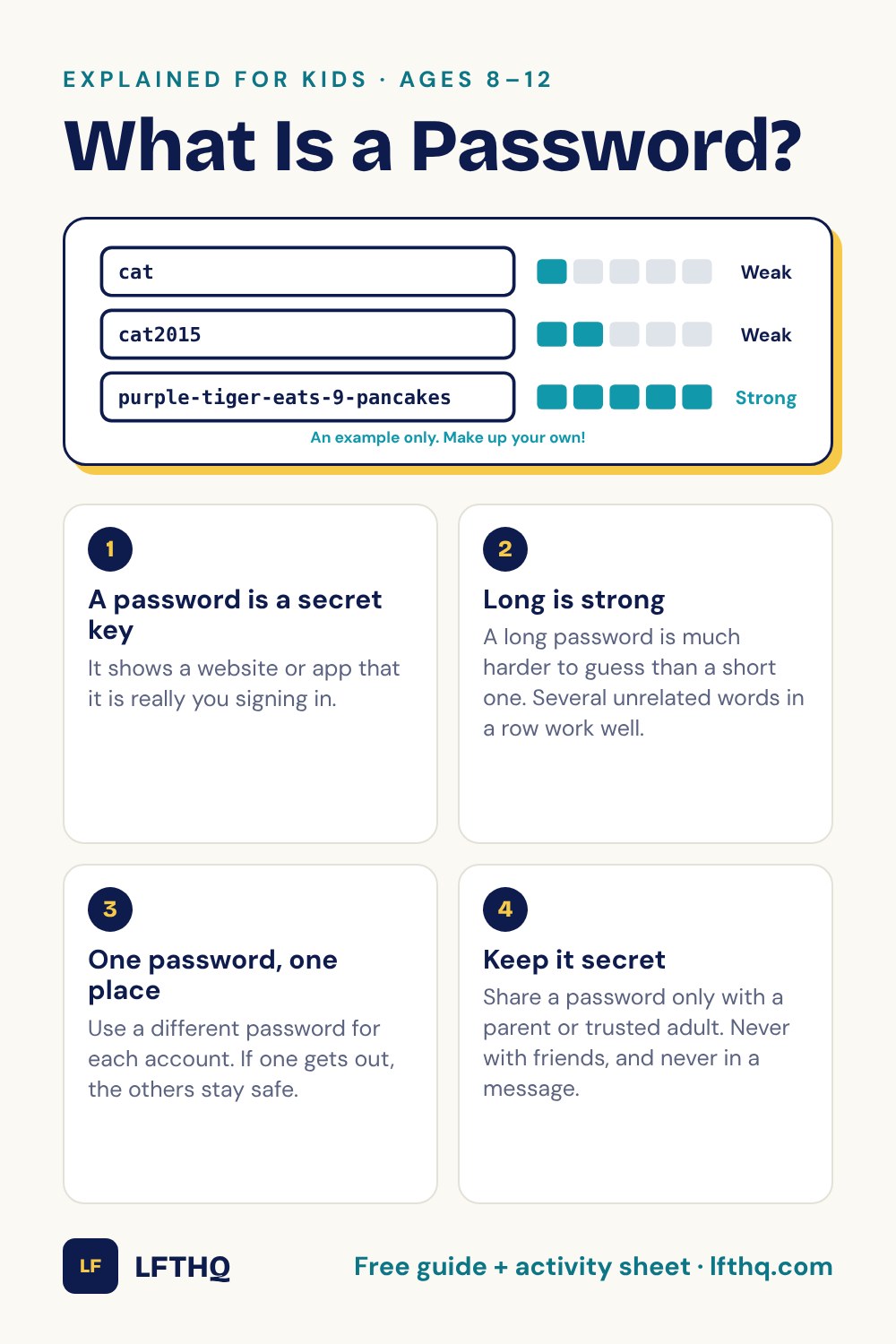
- Short passwords, such as
cat - Common ones, such as
passwordor123456 - Your name, your pet’s name, or your birthday
What makes a password strong?
Long is strong. A long password is much harder to guess than a short one.
An easy way to make a long password is to join several unrelated words, with a number if you like. This is called a passphrase. For example: purple-tiger-eats-9-pancakes. Do not use that one. Make up your own.
One password, one place
Use a different password for each account. If someone learns one of them, your other accounts stay safe.
That is a lot to remember. Many families use a password manager, an app that stores passwords safely. Ask a parent about it.
Keep it secret
- Share a password only with a parent or trusted adult.
- Do not tell friends, even close ones.
- Never send a password in a message.
- If you think someone knows your password, tell an adult and change it.
Questions to talk about
- Why is a long password harder to guess?
- What would you say to a friend who asks for your password?
- Why should each account have its own password?
Questions parents ask
What makes a password strong?
Length matters most. A long password is much harder for a computer program to guess than a short one, even a short one full of symbols. A strong password also avoids things other people could find out, like your name, birthday or pet's name.
Is a passphrase better than a password?
Often, yes. A passphrase is a few random words strung together, like four things you can see from your window. It is long, which makes it hard to guess, and it is easier to remember than a jumble of letters and numbers.
Should kids share their passwords with friends?
No. A password works like a house key. Even a good friend could log in by accident, or tell someone else. The only people a child should share passwords with are the trusted adults who look after them.
What is two-step verification?
It is an extra lock. After typing the password, you also enter a short code sent to a phone or shown in an app. Even if someone guesses the password, they still can't get in without that second step.