How to Build a Balanced Plant-Based Plate (With Easy Examples)
A plant-based meal can be pasta with tomato sauce, or it can be a meal that actually keeps you full and covers your nutrients. The difference is usually not a recipe. It is the shape of the plate.
The plate method
Harvard's Healthy Eating Plate is a simple guide that works well for plant-based meals. Picture your plate in three parts:
- Half: vegetables and fruit. Aim for color and variety. Potatoes do not count toward this half.
- A quarter: whole grains. Brown rice, oats, whole-wheat bread or pasta, quinoa, barley.
- A quarter: protein. On a plant-based plate, that means beans, lentils, chickpeas, tofu, tempeh, edamame, or seitan.
Add a small amount of a healthy plant oil, such as olive oil, for cooking or dressing, and drink water. That is the whole framework. You do not need to measure anything. Just look at the plate before you eat.
Five easy example plates
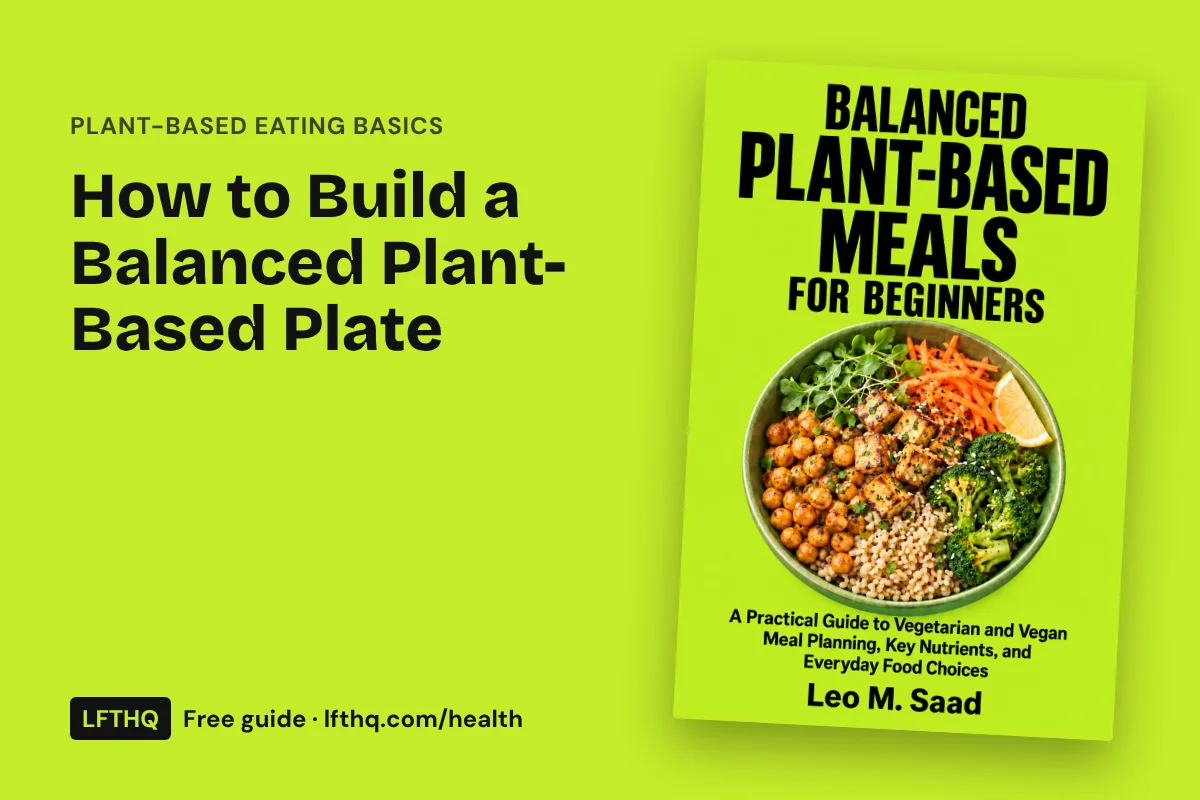
- Buddha bowl: roasted broccoli and carrots, quinoa, crispy chickpeas, and a lemon-tahini dressing.
- Tofu stir-fry: peppers, snap peas, and cabbage with firm tofu over brown rice.
- Bean tacos: black beans in whole-wheat or corn tortillas, with lettuce, tomato, salsa, and a side of fruit.
- Lentil pasta night: whole-wheat pasta with a lentil and tomato sauce, plus a big green salad.
- Breakfast plate: oatmeal made with soy milk, berries, and a spoon of nut butter or ground flaxseed.
Nutrients worth watching
A well-planned vegetarian or vegan diet can meet your needs at every stage of life, according to the Academy of Nutrition and Dietetics. “Well-planned” is the important part. These nutrients need a little attention:
- Vitamin B12: not found in unfortified plant foods. Use fortified foods or ask a professional about a supplement. See our B12 guide.
- Iron: plant iron is absorbed less well than iron from meat. The NIH notes that vegetarians may need almost twice the usual recommended amount. Eating beans, lentils, and fortified cereals with a vitamin C food, such as peppers, citrus, tomatoes, or broccoli, helps absorption.
- Calcium: fortified plant milk, calcium-set tofu, and some leafy greens.
- Vitamin D: some plant milks are fortified. Many people, plant-based or not, get too little.
- Omega-3 fats: ground flaxseed, chia seeds, and walnuts provide a plant form.
- Iodine: iodized salt is the simplest source if you do not eat dairy or seafood.
A starter shopping list
- Canned beans, chickpeas, and lentils (rinse before using)
- Firm tofu and frozen edamame
- Oats, brown rice, and whole-wheat pasta
- Frozen mixed vegetables and frozen berries
- Fortified soy milk
- Peanut butter, ground flaxseed, and walnuts
- Lemons, garlic, onions, and canned tomatoes for flavor
Common beginner mistakes
- Removing meat without adding a protein food. A plate of rice and vegetables alone will not keep most people full for long.
- Relying on processed vegan snacks. Plant-based does not automatically mean nutritious.
- Changing everything at once. Start with a few plant-based dinners a week and build from there.
Sources
- Harvard T.H. Chan School of Public Health, The Nutrition Source. Healthy Eating Plate. nutritionsource.hsph.harvard.edu/healthy-eating-plate/
- Melina, V., Craig, W., & Levin, S. Position of the Academy of Nutrition and Dietetics: Vegetarian Diets. Journal of the Academy of Nutrition and Dietetics, 116(12), 1970–1980 (2016). doi.org/10.1016/j.jand.2016.09.025
- NIH Office of Dietary Supplements. Iron: Fact Sheet for Consumers. ods.od.nih.gov/factsheets/Iron-Consumer/
This article is general nutrition information, not medical advice. If you are pregnant or breastfeeding, have a health condition, take medication, or are planning a diet for a child, talk with a doctor or a registered dietitian before making big changes.