7 Ways to Build an Emergency Fund on a Tight Budget
When the budget is already stretched, "just save more" is not useful advice. These seven ideas are about finding small amounts and making them stick.
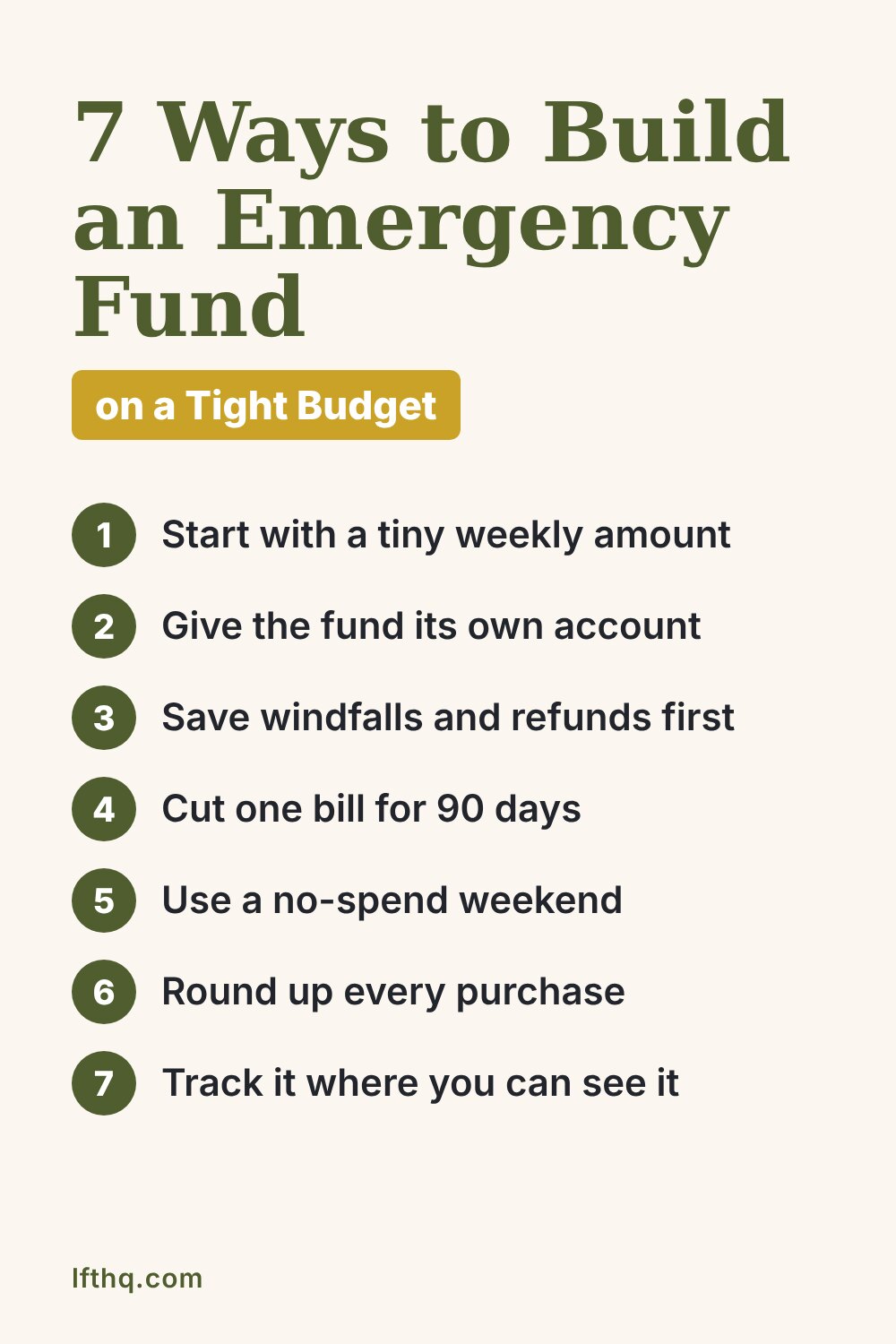
1. Start with a tiny weekly amount
Pick an amount so small it almost feels silly, like $5 or $10 a week. Right now the point is the habit, not the size. You can raise it later.
2. Give the fund its own account
Money sitting in your checking account tends to get spent. Keep your emergency fund somewhere separate. The Consumer Financial Protection Bureau suggests a place that is safe, easy to reach in an emergency, and not too tempting, and describes a dedicated account at a bank or credit union as one of the safest options.
3. Save windfalls and refunds first
A tax refund, a gift, a rebate, a bit of overtime. Before it disappears into everyday spending, decide how much goes to the fund. Even part of it can jump-start your savings.
4. Cut one bill for 90 days
Do not try to cut everything. Choose one thing: a streaming service, a subscription box, an app you forgot about. Pause it for 90 days and send that amount to savings instead. After three months, decide if you even miss it.
5. Use a no-spend weekend
Once a month, plan a weekend with no spending beyond the essentials. Cook what is in the pantry, find something free to do, and move what you would have spent into the fund.
6. Round up every purchase
Some banks offer a round-up feature that moves spare change from each purchase into savings. If yours does not, do it by hand: at the end of each week, look at what you spent and transfer the difference up to the next whole dollar.
7. Track it where you can see it
Progress you can see keeps you going. Print the free tracker below, stick it on the fridge, and color in a box each time you add money. Celebrate the small milestones.
Make it automatic
If you can, set up a recurring transfer from checking to savings on payday. Some employers also let you split your direct deposit so part goes straight to savings. Keep an eye on your checking balance so a transfer never causes an overdraft fee.
Not sure how much to aim for? Read how much your emergency fund should be.
This guide is general financial education, not personal financial, legal, or tax advice. Bank and account terms vary, so check the details of any account you use.