How Much Should Your Emergency Fund Be? A Simple Way to Pick Your Number
You have probably heard that you should have months of expenses saved. If you are living paycheck to paycheck, that number can feel so far away that it is easier not to start at all. So start smaller.
There is no single right number
The Consumer Financial Protection Bureau says the right amount depends on your situation, and suggests looking at the unexpected costs you have actually had before. That gives you a number based on your real life, not a rule of thumb.
Look back at your last few surprises
Think about the past year or two. What came out of nowhere?
- A car repair
- A trip to urgent care, or a bill insurance did not cover
- A phone or laptop that died
- A short paycheck, or a week with fewer hours
Write down roughly what each one cost. The biggest one is a good place to set your starter goal.
If your last car repair cost about $600, a $600 starter fund would cover the next one without reaching for a credit card. This is only an example. Use your own numbers.
Set a starter goal you can actually reach
Your first goal should feel close. Reaching it builds the habit and proves you can do it. Even a small amount gives you some breathing room, and that matters most when money is tight.
Then set your full goal
Once the starter fund is in place, add up what you need each month for the essentials: housing, utilities, food, transportation, insurance, and minimum debt payments. A full goal is often a few months of those essentials. Pick a number that fits your work and your household. Someone with freelance or gig income may want a bigger cushion than someone with a steady paycheck.
Decide what counts as an emergency
Write your own rules before you need them. A medical bill insurance did not cover, or a broken car you need to get to work? Yes. A sale on something you wanted? No. When a real emergency hits, use the money without guilt. That is what it is for. Then rebuild it over time.
Your 4-step starter plan
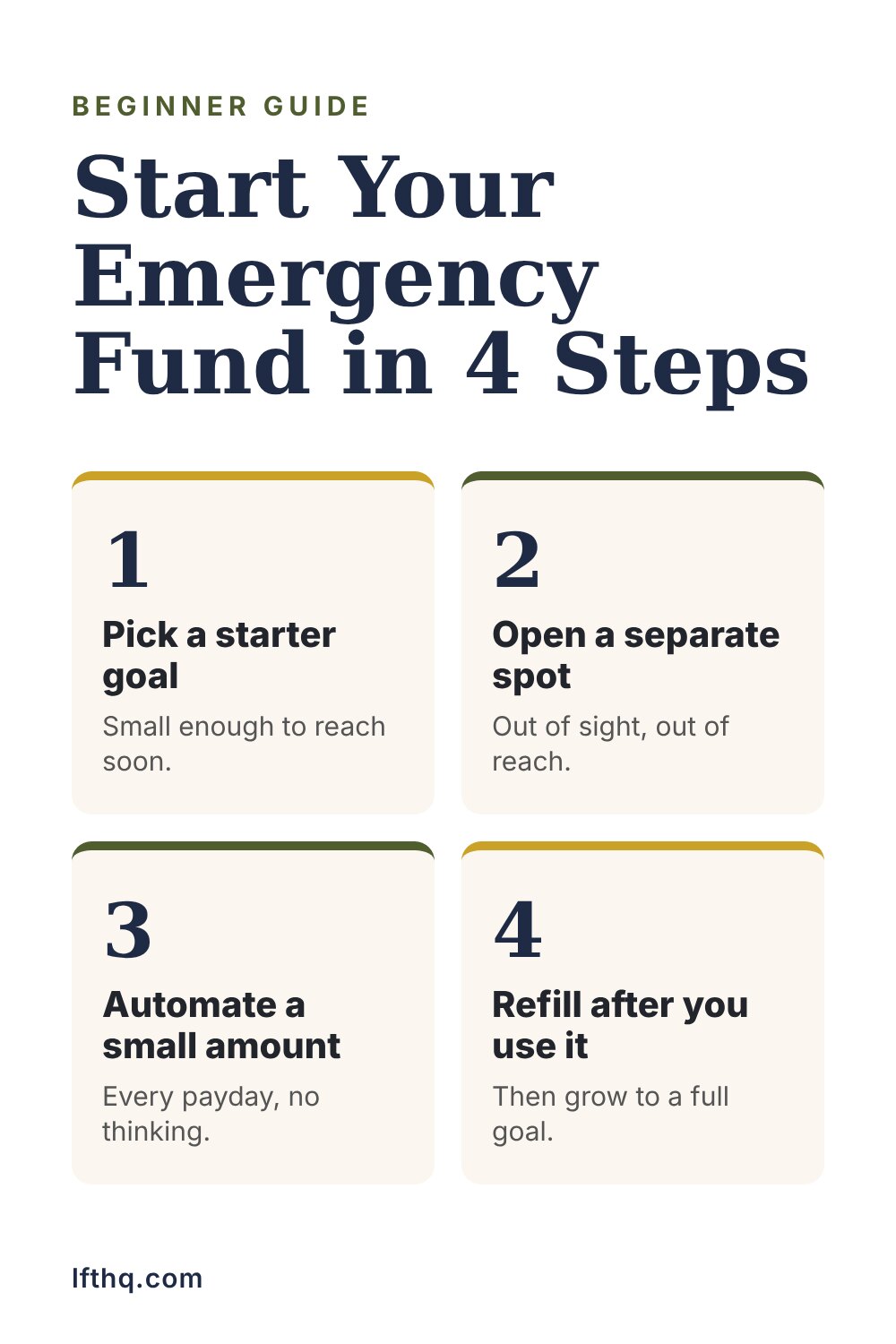
- Pick a starter goal from your biggest recent surprise bill.
- Open a separate spot for it, such as a separate savings account at a bank or credit union.
- Automate a small amount every payday.
- Refill it after you use it, then grow it toward your full goal.
Need ideas for finding the money? Read 7 ways to build an emergency fund on a tight budget.
This guide is general financial education, not personal financial, legal, or tax advice. Bank and account terms vary, so check the details of any account you use.