Debt Snowball vs. Debt Avalanche: Which Should You Use?
If you owe money on more than one credit card, every month you face the same question: where should any extra money go? The debt snowball and the debt avalanche are two simple answers. Both work. They just reward you in different ways.
Two ways to choose a target
Both methods start the same way. You pay the minimum on every card, every month, so nothing goes late. Then you put every extra dollar on one card, the target. When the target is paid off, its payment rolls onto the next card on the list.
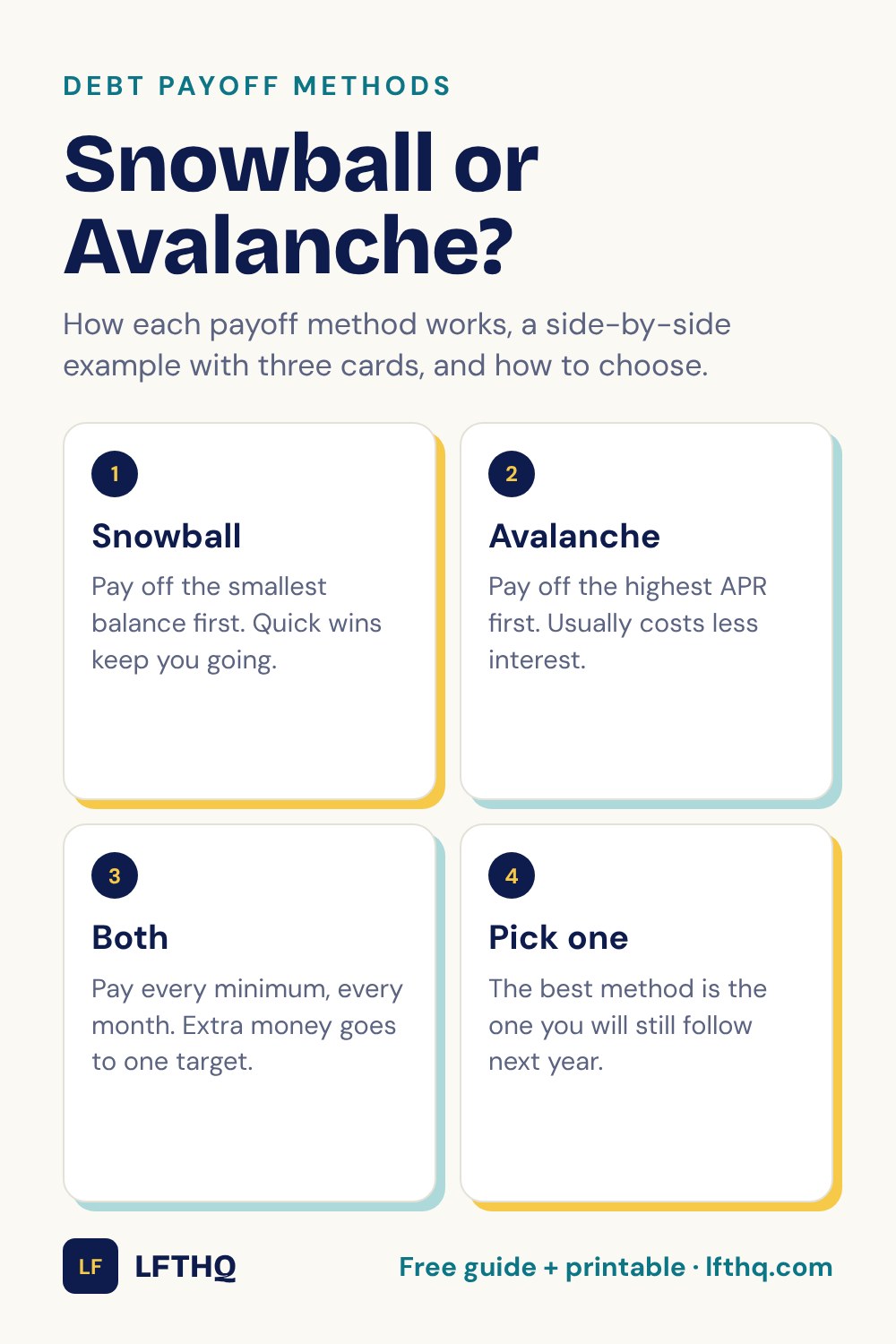
The only difference is how you order the list.
- Debt snowball: smallest balance first. You clear a whole card sooner, and that early win can keep you motivated.
- Debt avalanche: highest interest rate (APR) first. The most expensive debt shrinks first, so you usually pay less interest in total.
A worked example
Here is a hypothetical example. The numbers are made up to show how the methods differ. Your own results depend on your balances, rates, and payments.
| Card | Balance | APR | Minimum |
|---|---|---|---|
| Card A | $1,200 | 18% | $35 |
| Card B | $3,500 | 27% | $90 |
| Card C | $6,000 | 22% | $150 |
Say you can pay $500 a month in total, you stop using the cards, and the minimums stay the same. That leaves $225 extra each month on top of the minimums.
- Snowball targets Card A first. Card A is gone in month 5. Everything is paid off in month 28, with about $3,230 paid in interest.
- Avalanche targets Card B first. The first card is not gone until month 13. Everything is paid off in month 28, with about $3,057 paid in interest.
In this example, the avalanche saves about $173. The snowball gives you a paid-off card eight months sooner. Neither result is wrong. It is a trade between money and momentum.
Interest is charged each month at one twelfth of the APR. Minimums are fixed, there are no new charges or fees, and any money left after a card is paid off moves to the next card in the same month.
Which one should you pick?
Choose the avalanche if your rates are far apart, your largest debt also has the highest rate, or you are motivated by saving money.
Choose the snowball if you have tried before and given up, you have one or two small balances you could clear quickly, or you need to see progress to keep going.
Some people mix the two: they clear one small balance first for a quick win, then switch to the highest rate. That is fine. A plan you follow beats a perfect plan you drop.
Make either method work
- Stop adding to the balances. Neither method works if new charges keep pace with your payments.
- Automate the minimums on every card, then pay the extra to your target by hand.
- Roll payments forward. When a card is paid off, add its full payment to the next target instead of spending it.
- Write the order down. The free planner below lists your debts both ways, so you can see your order at a glance.
One card with several rates
A single card can carry more than one balance, for example purchases at one rate and a cash advance at another. Under federal rules, when you pay more than the minimum, the card issuer generally has to apply the extra to the balance with the highest rate first. You can read the rule on the Consumer Financial Protection Bureau’s website.
This guide is general financial education, not personal financial, legal, or tax advice. Card terms vary, so check your own card agreement and statements.