Can't Make Your Credit Card Minimum Payment? What to Do First
If you look at your statement and know you cannot cover even the minimum payment, you are not the first person in that spot, and you have more options than it may feel like. What you do before the due date matters most.
Don't ignore it
A missed payment can bring a late fee, and your card agreement may allow a higher penalty interest rate. Payments that are seriously late can be reported to the credit bureaus and hurt your credit. Waiting usually makes your choices smaller, so act early.
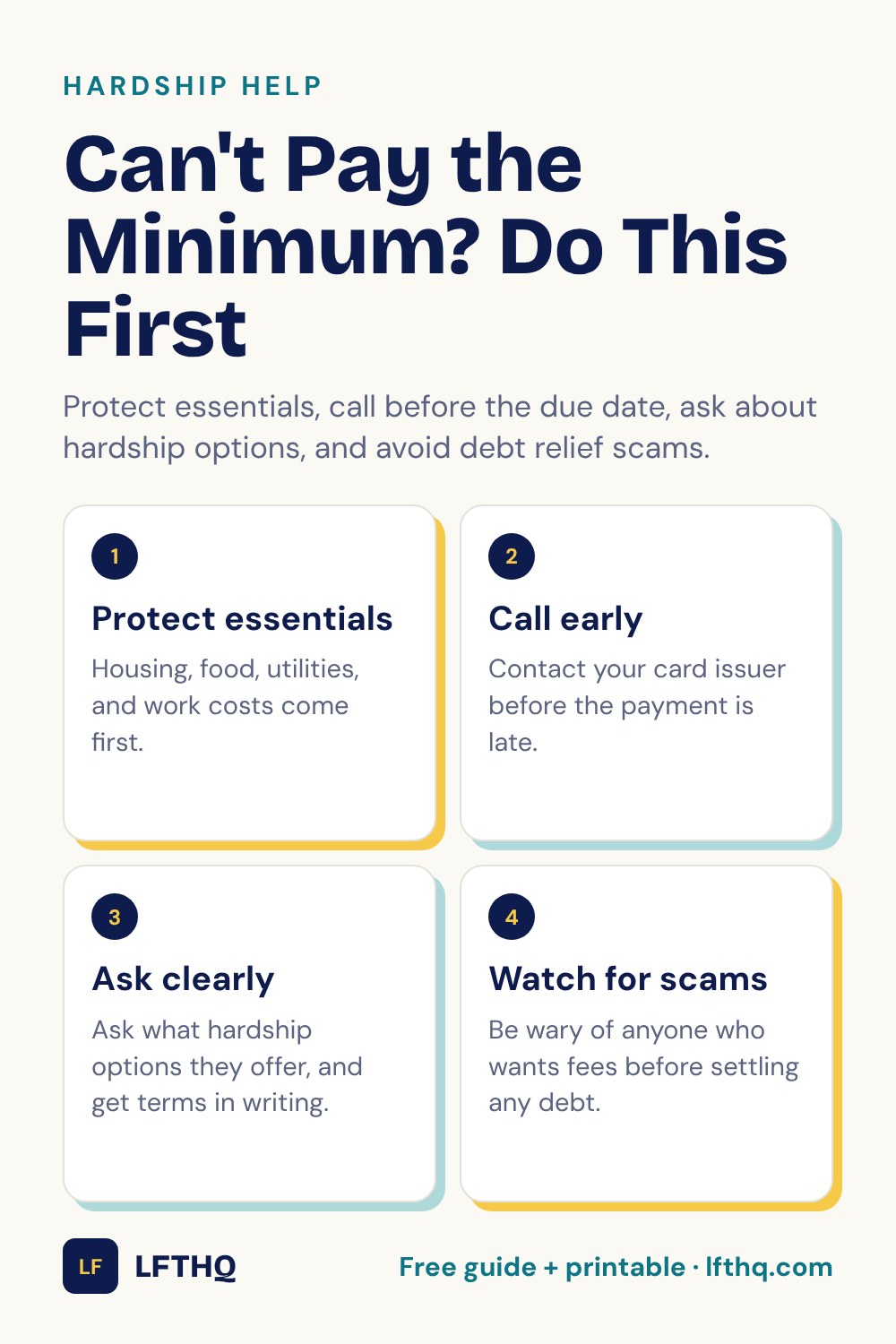
Protect your essentials first
Before you decide which bills to pay, make sure you can cover the basics: housing, utilities, food, medicine, insurance, and getting to work. A credit card payment matters, but it should not cost you your home or your job.
Then add up what is left. That number is what you can honestly offer toward your cards right now.
Call your card issuer early
Call the number on the back of your card, ideally before the payment is late. Explain briefly what has changed, such as reduced hours, a job loss, or a medical bill, and how much you can pay.
The Consumer Financial Protection Bureau suggests contacting your credit card company as soon as you know you may have trouble paying, to ask about your options.
What to ask
Card issuers do not all offer the same help, and they are not required to say yes. These questions help you find out what is available:
- Do you have a hardship program, and what does it include?
- Can my interest rate or minimum payment be lowered for a while?
- Can a late fee be waived this time?
- Can my due date be moved closer to my payday?
- Will joining a program close or freeze my card, and how is it reported?
- How long would the new terms last, and what happens after that?
Before you agree, make sure you can keep up with the new payment. Ask for the terms in writing.
Keep a call log
Write down the date, the name of the person you spoke to, what they offered, and any reference number. If something is promised by phone and later missing from your statement, your notes help you follow up. The free Credit Card Debt Log below has a call log page for this.
Free and low-cost help
Nonprofit credit counseling agencies can review your budget with you and explain your options, which may include a debt management plan. Ask about fees up front, and check that the agency is a nonprofit and that its counselors are certified.
Warning signs of a bad debt relief offer
When you are stressed about money, offers that promise to make debt disappear can be tempting. Be careful if a company:
- Wants fees before it has settled or reduced any of your debt.
- Promises results it cannot know, like cutting your debt in half.
- Tells you to stop talking to your card issuers.
- Pressures you to sign up today.
The Federal Trade Commission has a rule that stops debt relief companies that sell by phone from charging fees before they settle or reduce your debt. Read the FTC’s announcement of the rule.
This guide is general financial education, not personal financial, legal, or tax advice. Card terms vary, so check your own card agreement and statements.