How to Pay Off Credit Card Debt When Your Income Changes Every Month
Most budgeting advice assumes the same paycheck arrives on the same day every month. If you freelance, drive for an app, work on tips, or have hours that change, that advice can feel useless. You can still pay off credit card debt. The plan just needs to bend without breaking.
Why changing pay makes debt harder
With steady pay, you can promise yourself a fixed extra payment every month. With changing pay, a fixed promise breaks the first slow month. Many people then put the shortfall on a card, and the balance grows again.
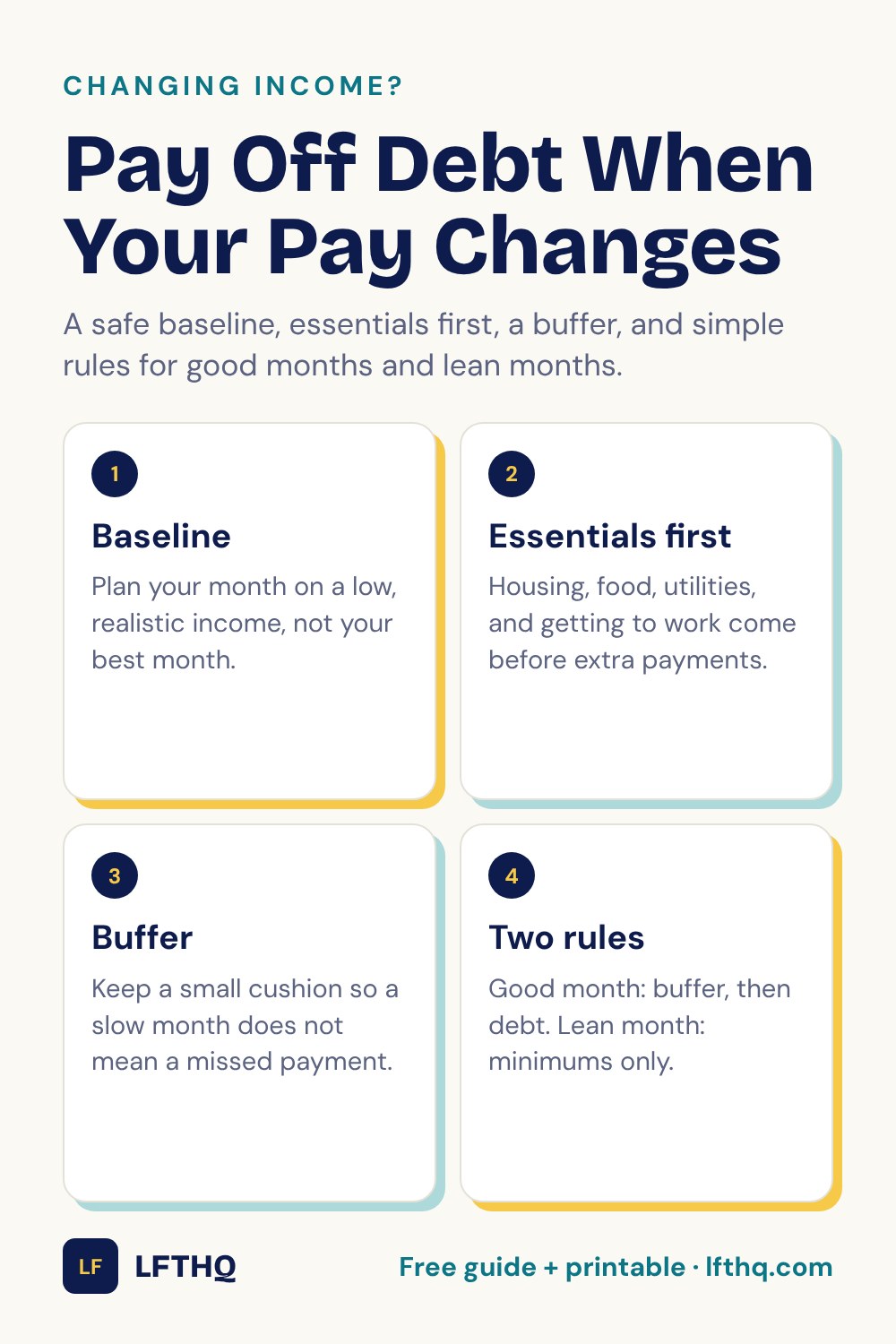
The fix is to separate what you must pay every month from what you pay only when money allows.
Step 1: Find your baseline
Look back at what you earned over the last six to twelve months, after taxes and work costs. Pick a number near the low end, a month you are fairly sure you can reach even when work is slow. That is your baseline.
Plan your regular month on the baseline only. Anything you earn above it is extra, and it gets a job when it actually arrives, not before.
Set aside money for taxes before you count income as available. Money that belongs to taxes is not money for debt.
Step 2: Pay in the right order
Every month, fill these in order, and stop when the money runs out:
- Essentials: housing, utilities, food, insurance, and what you need to get to work.
- Minimum payments on every credit card and loan, so nothing goes late.
- Your buffer, until it reaches your target (Step 3).
- Extra payments to one debt at a time, using the snowball or avalanche order.
Step 3: Build a small buffer
A buffer is a small amount of cash kept apart from your spending money, often in a separate savings account. Its only job is to cover essentials and minimums in a slow month, so you do not reach for a credit card.
Start small. Even one month of minimum payments set aside makes a lean month less frightening. Build it up over time as your income allows.
Step 4: Set good-month and lean-month rules
Decide your rules now, while you are calm, so you do not have to decide under pressure later.
- Good month (above baseline): top up the buffer first, then send the rest of the extra to your target debt. You could also keep a small, fixed share for yourself, so the plan feels livable.
- Normal month (around baseline): essentials, minimums, and any planned extra payment.
- Lean month (below baseline): essentials and minimums only. Use the buffer to fill the gap. No extra payments this month, and that is fine.
If a lean month means you cannot cover even the minimums, read what to do when you can’t make the minimum payment before the due date passes.
Step 5: Line up due dates with paydays
Write down when each card is due and when money usually arrives. If a due date falls right before your slowest week, ask your card issuer whether you can move it. Setting automatic minimum payments can protect you from late fees, as long as the money is in the account on that day.
Track each month on the free worksheet below. After a few months you will see your real pattern, and you can adjust your baseline up or down.
This guide is general financial education, not personal financial, legal, or tax advice. Card terms vary, so check your own card agreement and statements.